Cabana Baby: A Friendly Font for Your Small Business Brand
Last week, I was sitting with a client who runs a small organic skincare line. We were staring at her current product labels, which were a mismatch of generic clip-art and a default system font. She wanted a refresh—something that felt as natural and gentle as her chamomile balms. We needed a typeface that whispered “handmade” without screaming “amateur.” That’s when I pulled up Cabana Baby.
What Makes Cabana Baby Stand Out
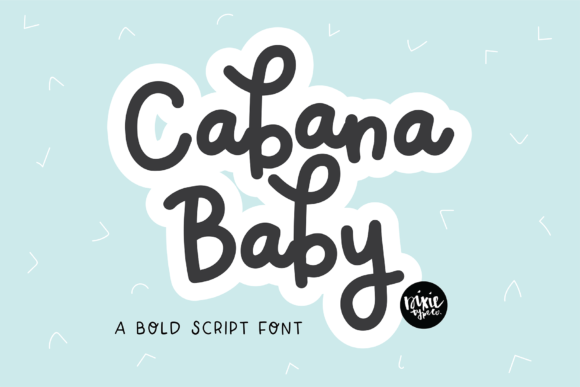
Cabana Baby is a cute and casual handwritten font from Script Amp. It has an incredibly friendly feel, the kind of lettering that looks like it was lovingly penned with a fine-tipped marker on a sunny afternoon. It is not stiff or overly formal. Instead, it carries a relaxed warmth that immediately puts people at ease. For small business owners, finding a font that balances personality with polish is like finding a hidden gem. Cabana Baby fits that role perfectly, offering the charm of a custom script without the high price tag of a bespoke typeface.
Putting Cabana Baby to Work: From Bakery Boxes to Beauty Labels
To really test a font, I like to push it into real-world scenarios. I recently used Cabana Baby for a mock rebrand of a friend’s home bakery. She needed labels for her signature shortbread cookies and her seasonal jam jars. The handwritten style of Cabana Baby made the simple kraft paper boxes look like they came from a charming countryside patisserie. The key was readability. Even when printed on a standard inkjet printer at a small size for ingredient lists, the letterforms remained clear and friendly. This is crucial for product packaging—customers need to trust what is on the label, and a legible script builds that trust instantly.
For the skincare client, I used Cabana Baby for the product names on her glass bottles. Words like “Rosewater Mist” and “Calming Serum” took on a personal, artisanal quality. Paired with a simple, clean layout, the font added a human touch that no sterile sans serif could replicate. It signaled that her products were made with care, not on an assembly line.
Digital Presence: Social Media and Online Shops
Brand consistency is non-negotiable. If your packaging looks warm and handmade, your Instagram feed and website should follow suit. I find Cabana Baby works beautifully for social media templates. It is perfect for quote graphics, “new product” announcements, and thank-you cards that you post as stories. For online shop banners, it serves as a fantastic display font for the main headline.
However, I always advise caution with highly decorative scripts on small mobile screens. Cabana Baby is friendly and open, making it more readable than many complex calligraphy fonts. But it shines best in headlines, short phrases, and logos on digital platforms. For long body text on a website, pair it with a clean sans serif font like Open Sans or Lato. This creates a beautiful contrast—the handmade charm of Cabana Baby against the reliable readability of a modern typeface.
Technical Check: Sizing, Pairing, and Licensing
Before you fall in love with a font, you need to understand its technical side. Cabana Baby is available through Script Amp and comes as a standard font file. If you are planning to use it for commercial projects—selling products with the font on the label, using it in logos you design for clients, or selling templates that include the font—you must check the commercial license included with your purchase. This protects your business and the designer.
In terms of font pairing, Cabana Baby is incredibly versatile. Here are two pairings I have tested and recommend:
- With a Modern Sans Serif: Use Cabana Baby for the main product name or headline. Use a crisp sans serif like Montserrat or Poppins for ingredients, descriptions, and pricing. This pairing works for almost any product label or menu.
- With a Classic Serif: For a more editorial, high-end feel, pair Cabana Baby with a classic serif like Playfair Display for body copy. This combination works well for boutique brands that want to feel both artistic and premium.
The Emotional Impact: Why Handwritten Fonts Work
The most successful small businesses understand that customers buy with their hearts as well as their heads. A font like Cabana Baby conveys authenticity and approachability. When a customer picks up a jar with a handwritten-style label, they subconsciously feel a connection. It implies a real person made this, not a faceless corporation. This is the power of Script Amp’s Fonts collection—it bridges the gap between professional design and genuine human expression.
I used Cabana Baby for a friend’s boutique clothing tags. The tags themselves were simple recycled cardstock. The handwritten “Thank You” and “Care Instructions” in Cabana Baby transformed them from throwaway pieces of paper into keepsakes. Customers started sharing photos of the tags on Instagram. That is the kind of organic engagement you cannot force, and it all started with a thoughtful typography choice.
Practical Applications: Where Cabana Baby Shines
Let’s summarize where Cabana Baby works best for your business materials:
- Logo Design: Perfect for lifestyle blogs, bakeries, florists, and children’s brands where a friendly face is essential.
- Packaging Design: Ideal for labels, boxes, and stickers. It makes handmade goods look polished.
- Business Cards: Adds a personal touch that stands out in a pile of standard cards.
- Menus: Great for section headers and item names in cafés and casual restaurants.
- Digital Design: Engaging for social media stories, YouTube thumbnails, and Pinterest pins that need a human touch.
Just remember to avoid using it for long blocks of text in print or online, as it can become tiring to read. Reserve it for the moments you want to create a friendly, memorable impact. A font is often the first handshake you have with a potential customer. Cabana Baby offers a warm, confident grip. It is a tool that helps small business owners tell their story with authenticity, making your brand feel instantly more professional, cohesive, and most importantly, human.